
12 Apr Auto Electrical System – Part 3: Fuses
 This multi-part blog series breaks down a vehicle’s electrical system into easy-to-understand chunks. Part 1 was an overview of the basic principles of your auto electrical system. Part 2 discussed the ignition & starter, auto lights, and auxiliary systems. In Part 3, we discuss the importance of fuses in your vehicle’s electrical system. Below are details on how car fuses work, where to find your fuse box, and auto repairs for common electrical system issues.
What Are Car Fuses?
Car fuses play an important role in protecting your vehicle’s electronic components and wiring from damage. These small devices blow when there is excessive current or a short circuit in your electrical system. It’s better to blow the small, inexpensive fuse than the complex electronic component it’s protecting.
Find Car Fuses In The Fuse Box
You can find your car’s fuses all grouped together in a fuse box. Some modern cars have two fuse boxes. The one in the engine compartment manages circuits for electronic safety features, like anti-lock brakes, auto-braking, and other driver-assisted systems.
Look for the second box in the glove compartment or under the vehicle’s driver’s side dashboard. In some cars, you may even find it under the rear seat. This secondary fuse box often holds fuses for the circuits that control cabin devices, like the windshield wipers, entertainment system, and power seats, windows & doors.
Click here for a fuse box diagram for your car.
How Do Car Fuses Work?
Most fuses have a fragile metal filament or wire that maintains the circuit and breaks (or blows out) when overloaded. This protects the component powered by the wiring. Once a fuse blows, that car part will stop working until you replace the fuse.
Different Types Of Car Fuses
Most modern vehicles have fuses in their electrical systems to protect against short circuits and overloads. However, the number of car fuses varies depending on the vehicle’s make and model. The more bells and whistles in a car, the more fuses are required to operate and protect them.
Blade Fuses
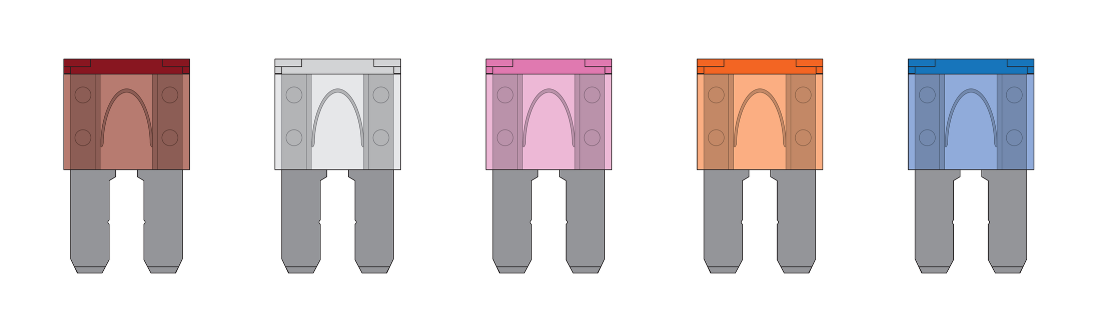
Blade fuses are small, flat, plastic rectangular tabs with metal terminals. They come in lots of different sizes and color options, based on their amperage rating. Each different color represents a specific size or amp range. There are different sizes of blade fuses, such as:
- mini fuses
- standard fuses
- maxi fuses
Glass Tube Fuses
These fuses are glass cylinders with metal caps at each end. The glass tube fuse allows you to see the thin gauge wire inside, which snaps into pieces when the fuse blows.
Electronic Circuit Breakers
Some newer vehicles use more advanced technology for electronic protection. Methods like electronic circuit breakers or solid-state systems could eventually replace the traditional all-fuse system currently in use.
Troubleshooting Tips:
Blown Car Fuses
In general, fuses have a very long shelf life. They don’t wear out in measurable intervals (miles or years), but vehicles often experience blown fuses once they are 10 to 15 years old.
Fuse Maintenance
Fuses don’t really need maintenance, but they require replacement when they blow. If an electrical device in your car stops working suddenly, check the fuse box for a blown fuse. Your owner’s manual, and sometimes inside the fuse box, contains a fuse diagram that identifies which fuse is connected to which component.
Electrical System Service & Auto Repairs
In most cases, you can still drive with a non-essential blown fuse (like the entertainment system or window controls). However, you should pull over and replace blown fuses that power safety features (like ABS braking or brake lights) before continuing to drive. The experienced technicians at Ron’s Garage can perform a detailed diagnostic inspection to identify all blown car fuses in your vehicle’s fuse box. If your car requires additional auto repairs to the electrical system, we can provide a thorough quote for the work, backed by our 24-month/24,000-mile warranty.
Make An Appointment
For more details or to schedule an appointment, call us at 734-662-8379 or visit us online.