
18 Nov TPMS Warning Light: Does Cold Air Cause Low Air Pressure?
 It’s officially sweater weather, so you know what that means? If you guessed ‘adding air to your tires’, you’re correct! Colder nighttime temperatures can significantly reduce tire pressure, triggering a dashboard warning light. If your tire monitoring system detects low air pressure in your vehicle’s tires, the TPMS warning light will turn on. But cold air isn’t the only reason for low air pressure in your tires. Keep reading for more valuable information.
What Is The TPMS Warning Light?
Your vehicle’s TPMS (Tire Pressure Monitoring System) warning light indicates that one or more of your tires require attention. The air pressure may be too low or too high. On some vehicles, this warning light may illuminate due to a sudden change in tire air pressure. Low air pressure can occur due to a puncture or other tire damage. You can view the TPMS as an early warning system, but it’s not a replacement for routine tire maintenance. There are two main types of tire-monitoring systems: direct and indirect.
Direct Tire Monitoring System
Most vehicles in the United States use a direct type of TPMS, which has a pressure sensor or transmitter mounted to the wheel with a metal strap or attached to the end of the valve stem inside the tire’s air chamber.
Indirect Tire Monitoring System
Indirect systems gather data by comparing how your vehicle’s tires turn in tandem. Indirect systems use the ABS’s wheel-speed sensors to monitor the revolutions of all four tires while the car is moving. The onboard computer system tracks any small changes in tire rotation speed, created by different tire inflation pressures.
What Triggers The TPMS Warning Light?
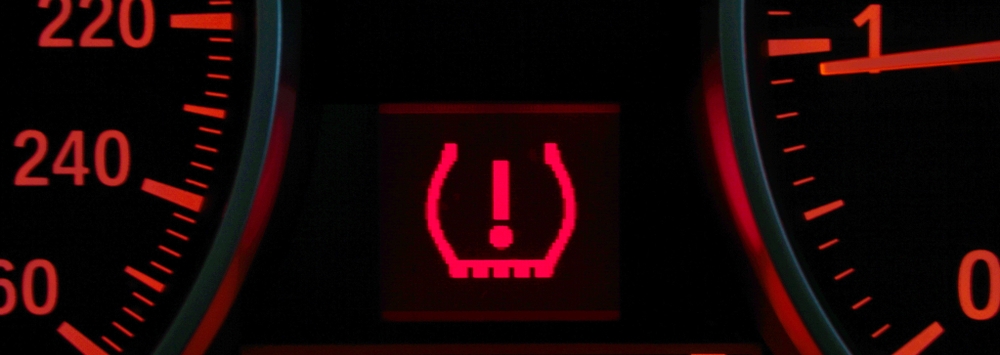
An icon illuminated on your dashboard that looks like a cutaway tire with an exclamation point or says ‘TPMS’ means your tire monitoring system has issues. TPMS can operate differently or collect information from different sources. Below are several common reasons your vehicle’s TPMS warning light may be on.
Weather Changes
Falling temperatures can trigger the system because tire pressure declines with the ambient temperature. In general, tire pressure changes up or down one pound per square inch for each up or down 10-degree incremental change in temperature. For example, if the temperature drops 30 degrees, your tire pressure can drop by 3 psi. You can reduce this issue by checking your tire air pressure every time you get gas.
Bad Sensor
Unfortunately, TPMS sensors do not last forever. Auto manufacturers use different types of TPMS sensors, so check your owner’s manual to determine which type your vehicle has. Your warning light may illuminate, indicating an issue such as a dead battery or loose connection in one of the sensors. A qualified service technician can determine if your vehicle needs new TPMS sensors.
Low Air Pressure Due To A Slow Leak
While it’s normal for tires to lose air over time, a slow leak usually occurs due to damage. The most common causes of a slow leak are:
- Missing Valve Stem Cap
- Damaged Valve Stem
- Puncture (from a foreign object like a screw, nail, or other sharp item)
- Damaged Rim
Routine Tire Maintenance
As winter temperatures continue to drop, low air pressure in your tires can trigger the TPMS warning light. It may shut off by itself as the air in your tires warms up, expands, and reaches the correct psi. However, it’s important to remember that driving with low air pressure in your tires is a safety risk. It can also compromise handling and increase tire wear. Our experienced technicians at Ron’s Garage will happily examine your vehicle’s tire pressure and perform a diagnostic inspection to determine the cause of your TPMS warning light. If your tire monitoring system requires service, you can count on Ron’s Garage to use quality replacement parts at an affordable price.
Schedule Tire Maintenance
Give us a call at (734) 961-4701 or visit our website to schedule your next appointment. You can also drop by the shop any time Monday – Thursday: 7:00 am – 6:00 pm.
1130 Rosewood St.
Ann Arbor, MI 48104