


10 Jun Auto Electrical System Part 5: Battery & Starter Motor
 This multi-part blog series breaks down a vehicle’s electrical system into easy-to-understand chunks. Part 1 was an overview of the basic principles of your auto electrical system. Part 2 discussed the ignition & starter, auto lights, and auxiliary systems. Part 3 detailed the importance of car fuses in your vehicle’s electrical system. Part 4 focused on the engine control unit (ECU) and how it works with your vehicle’s on-board computers to run the electrical system. In Part 5, I explain how the car battery and starter motor work with other electrical system components and how routine auto maintenance helps extend their lifespan.
How Does A Car Battery Work?
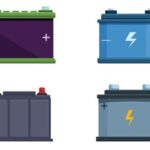
A car battery is a rechargeable battery that powers your vehicle via the electrical system. Most car batteries are 12-volt lead-acid batteries. They contain six cells inside the outer plastic shell. Each cell has one lead plate and one lead-dioxide plate, producing two volts. This formula (6 cells x 2 volts = 12 volts) is where the term 12-volt battery comes from. The electrolyte solution of sulfuric acid completely submerges the plates. The plates and acidic solution create a chemical reaction that eventually produces electrons. The electrons flow through the battery terminals and power your vehicle.
Car Battery Designs
Different vehicles may need specific battery designs designated by type, size, and power requirements. In order for the car battery to effectively power your vehicle, auto manufacturers indicate which battery to use. Car batteries differ in the following categories:
Cold Cranking Amps (CCA)
Cold cranking amps determine the amount of power or amperage that the battery consistently delivers in 30 seconds at a cold temperature (zero degrees F). The higher the CCA rating, the better a car battery performs in below-freezing temperatures.
Group Size
Group size refers to the literal dimensions of the car battery (length, width, height, and which side the +/POS and -/NEG terminals are on). This sizing standard ensures manufacturing consistency across all brands.
Reserve Capacity (RC)
Reserve capacity measures how long the car battery supplies power to the vehicle after you turn off the ignition, or the battery charging system fails. The higher the RC, the longer the battery provides power to the car on its own before requiring a charge. This factor is important for vehicles with numerous electronic features or aftermarket accessories.
Caring For Your Car Battery
Routine auto maintenance helps keep your car battery in good working condition and can help extend its lifespan. It involves:
- Clean the Terminals: During each oil change service, ask the technician to check the battery terminals and cable ends for corrosion. If you notice corrosion build-up between oil changes, clean them with a toothbrush, water, and baking soda.
- Inspect Car Battery For Damage: A bulging or cracked outer battery case requires immediate replacement. Leaking battery fluid is dangerous. Never place a battery on its side or upside-down. Use gloves to remove the battery, or tow your vehicle to a service station and let the professionals properly dispose it and install the replacement.
- Maintain the Charge: Use a trickle charger if you store your vehicle for more than a month.
- Regulate Temperature: Extreme temperatures (hot or cold) can reduce the effectiveness and longevity of your car battery. Use a battery blanket during cold months and park indoors or under a carport to help keep your car from freezing temperatures. During the summer, try to park in the shade or use a car cover to reduce heat build-up.
How Does A Starter Motor Work?
A starter motor provides short bursts of torque to turn over the engine. When you start your internal combustion engine, power flows directly from the battery to the starter motor. This action then creates a string of activity from the ignition and fuel systems. The starter motor requires more power than any other component on your car.
Can A Starter Motor Go Bad?
As with any automotive component, age, wear and tear, and poor maintenance can contribute to faulty parts. If your vehicle has trouble starting, inspect the car battery first. If it checks out fine across the board, then move on to the starter motor. Here are a few things to consider:
- Damaged bearings inside the starter can slow the movement down enough that it cannot spin fast enough to turn over the engine.
- Reduced torque resulting from worn insulation on the armature winding.
- Worn or damaged connections in the solenoid or commutator reduce the electrical connectivity required to operate correctly.
Auto Maintenance in Ann Arbor, MI
The average lifespan of a car battery is three to five years. Signs you need a new car battery include: trouble starting, dim headlights, the battery dashboard warning light, or other electrical problems. The signs of a faulty starter motor often mimic those of a bad battery. If you suspect an issue with one (or both) of these components, come in to Ron’s Garage in Ann Arbor, MI. Our technicians will perform a complete electrical system diagnostic service to determine if the car battery or starter motor requires repairs or replacement. And remember, regular auto maintenance keeps your vehicle running great and helps extend the lifespan of expensive automotive parts.
Make An Appointment
Call us today at (734) 662-8379, visit us online, or stop by the shop to make your appointment.
Ron’s Garage
1130 Rosewood St.
Ann Arbor, MI 48104