

18 Sep Auto Wheel Balancing: What Are The Benefits?
 Do you ever feel overwhelmed by car maintenance? I do. I mean, sometimes it feels like I have my car in for factory-recommended service every other month. Are all these appointments really necessary? Take wheel balancing, for example. Is it really needed, or can I skip it? Let’s break it down. Part of routine tire maintenance includes wheel balancing, which corrects any imbalance (like radial runout), to ensure your vehicle is safe to drive. Consider it preventative medicine for your car. Keep reading for more information, including a detailed description, suggested service intervals, and the benefits you can expect.
What Is Wheel Balancing?
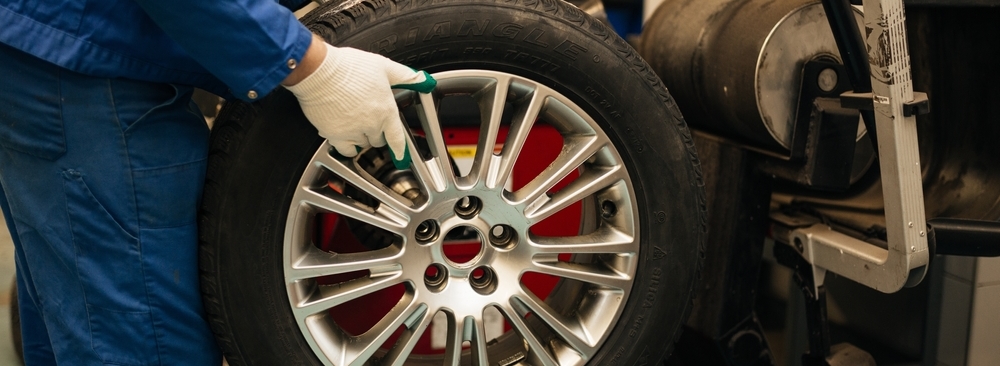
Due to manufacturing imperfections, both tires and rims are slightly out of balance. Once your technician mounts the tires to your rims and installs the various sensors and monitors, those slight imbalances can become more exaggerated. A wheel balancing service measures the amount of imbalance and applies corrective weights to the rims to ensure your wheels roll smoothly. Choosing the best method of wheel balancing depends on your vehicle type and driving style. Below are the three wheel balancing options most auto service centers offer as part of routine tire maintenance.
Static Balancing
Static balancing has been used for decades to ensure that your vehicle’s tires are evenly weighted. The process involves mounting the rim and tire onto a stand and spinning it. A technician will add small weights onto the rim to correct any imbalance. If the rim no longer wobbles when spun, then your wheel is weighted evenly around its circumference. Static balancing is an easy and reliable method for correcting wheel imbalance in most passenger cars and light trucks.
Dynamic Balancing
Dynamic wheel balancing uses a more advanced method that accounts for the weight distribution of the tire and rim, as well as the tire’s shape. A machine spins the mounted tire and measures all the rotational variations. The machine analyzes the data and recommends the weight placement and amount required to correct the imbalance. Dynamic balancing often resolves persistent tire-related issues that went uncorrected with static balancing.
Road Force Balancing
Road force balancing accounts for the distribution of tire and rim weight, tire shape, and the amount of force generated by the tire when in contact with the road. A specialized machine simulates the vehicle’s weight on the tire as it spins. It then measures the road force and suggests the weight amount and placement required to balance the tire. This method of wheel balancing minimizes vibrations from the tire, which can cause driver discomfort, increase tire tread wear, and compromise vehicle safety.
Identify Signs of Wheel Imbalance
Wheel imbalance can lead to serious issues if not addressed through routine tire maintenance, including excessive tire tread wear, suspension problems, and reduced vehicle performance. Unbalanced wheels happen when the mass of the vehicle’s combined rim and tire is unevenly distributed on the axle. This uneven weight distribution results in an uneven rotation. If more than one wheel is out of balance, then the issues are even worse and can cause:
- Bouncing, Shimmying, Wobbling
- Driver Fatigue
- Excessive or Uneven Tire Tread Wear
- Poor Fuel Economy
- Steering Wheel Vibrations
- Tire Noise (humming, thumping, whirring)
When technicians discuss wheel balancing, they may refer to the bouncing, wobbling, or vibrations as lateral or radial runout. There are two types of wheel runout that deal with the tires and wheels, and one type that deals with the parts to which the wheel is attached.
Lateral Runout
Lateral runout references the side-to-side deviation (like a wobble or shimmy) from a perfectly circular shape.
Radial Runout
Radial runout references the up-and-down deviation (like bouncing) from a perfectly circular shape.
Axial Runout
Axial runout references the deviation from a perfect centerline wheel rotation. Axial runout can cause wheel vibration, jerkiness, and uneven tire wear due to a damaged or improperly installed wheel bearing or hub.
Wheel Balancing Benefits
Properly balanced wheels offer many benefits. First, your finances will benefit from avoiding unnecessary repair costs due to premature tire replacements resulting from excessive tread wear, as well as repairs or replacements to the suspension and steering components. Second, improved vehicle safety through stable steering and reliable suspension can help you avoid collisions, which can save lives. Finally, fuel economy often suffers due to poorly balanced wheels, forcing you to refill your gas tank more frequently.
How Often Should I Schedule Wheel Balancing?
As a good rule of thumb, follow your auto manufacturer’s guidelines, found in your owner’s manual. Generally, most vehicles require wheel balancing every 5,000 – 6,000 miles as part of routine tire maintenance. Unfortunately, wheel balancing doesn’t last forever. Road hazards like potholes, parking curbs, and even normal wear & tear can make your wheels out of balance. One final thing to consider: ask your service technician about wheel balancing when getting new tires, after tire rotation, and whenever you notice the signs mentioned above.
Tire Maintenance in Ann Arbor, MI
Ron’s Garage uses the latest tire mounting, balancing, rotating, and aligning equipment and technology. We provide excellent tire maintenance services to help extend the life and protect the quality of your vehicle’s tires. Our technicians will gladly discuss radial runout and tire imbalance symptoms at your next wheel balancing appointment.
Schedule Service
To make an appointment with our service writer, call us at (734) 662-8379 or go to our website. We look forward to seeing you!
Road Hazard Warranty
We offer a Road Hazard Warranty on tires purchased at Ron’s Garage. You can rest easy knowing that you can bring your vehicle back to us if you encounter any problems with your tires for three years after the date of purchase. Click Here for details.